Text
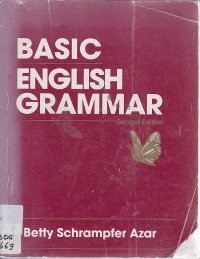
Basic English Grammar
Tidak Tersedia Deskripsi
Ketersediaan
#
Belum memasukkan lokasi
Belum memasukkan lokasi
07136.01
Tersedia
Informasi Detail
- Judul Seri
-
-
- No. Panggil
-
B BET 425
- Penerbit
- america : prentice Hall Regents., 1995
- Deskripsi Fisik
-
vii + 455 hlm
- Bahasa
-
English
- ISBN/ISSN
-
0-13-368317-6
- Klasifikasi
-
425.
- Tipe Isi
-
-
- Tipe Media
-
-
- Tipe Pembawa
-
-
- Edisi
-
2
- Subjek
-
Index
acknowledgments
Adjectives and adverbs
Preface to the second edition
CHAPTER I Using be and have
Noun + is + noun: singular
Noun + are + noun: plural
Pronoun + be + noun
Contractions with be
Negative with be
Be + adjective
Be + a location
Summary: sentence patterns with be
Yes/no questions with be
Questions with be: using where
Using have and has
Using my, your, his, her, our, their
Using this and that
Using these and those
Asking questions with what and who + be
CHAPTER II Expressing present time (part 1)
Form and basic meaning of the simple present tense
Using frequency adverbs: always, usually, often, s
Using frequency adverbs with be
Pronunciation of final-s: /z/ and /s/
Spelling and pronunciation of final -es
Adding final -s/ -es to words that end in -y
Irregular singular verbs: has, does, goes
Summary: spelling and pronunciation of -s and -es
The simple present: negative
The simple present: yes/no questions
The simple present: asking information questions w
Summary: information questions with be and do
Using it to talk about time
Prepositions of time
Using it to talk about the weather
CHAPTER III Expressing present time (part 2)
Be + -ing: the present progressive tense
Spelling of -ing
The present progressive: questions
The simple present vs the present progressive
Nonaction verbs not used in the present progressiv
See, look at, watch, hear, and listen to
Need and want + a noun or an infinitive
Would like
Would like vs like
Think about and think that
There + be
There + be yes/no questions
There + be asking questions with how many
Prepositions of location
CHAPTER IV Nouns and pronouns
Nouns: subjects and objects
Adjective + noun
Subject pronouns and object pronouns
Nouns: singular and plural
Nouns: irregular plural forms
Nouns: count and noncount
Using an vs a
Using a/an vs some
Measurements with noncount nouns
Using the
Using (no article) to make generalizations
Using some and any
Indefinite fronouns: something, someone, anything,
Indefinite pronouns: nothing and no one
CHAPTER V Expressing past time
Using be: past time
Past of be: negative
Past of be: questions
The simple past tense: using -ed
Past time words: yesterday, last, and ago
Pronunciation of -ed: /t/, /d/, and /d/
Spelling of -ed verbs
Spelling of -ed and -ing: two-syllable verbs
The simple past: irregular verbs
The simple past: negative
The simple past: yes/no questions
More irregular verbs
The simple past: using where, when, what time, and
Questions with what
Questions with who
Asking about the meaning of a word
Before and after in time clauses
When in time clauses
CHAPTER VI Expressing future time
Future time: using be going to
Words used for past time and future time
Using a couple of or a few with ago (past) and in
Using today, tonight, and this + morning, afternoo
Future time: using will
Asking questions with will
Verb summary: present, past, and future
Verb summary: forms of be
Using what + a form of do
May/might vs will
Maybe (one word) vs may be (two words)
Future time clauses with before, after, and when
Clauses with if
Expressing habitual present with time clauses and
CHAPTER VII Expressing ability
Using can
Using can: questions
Using know how to
Using could: past of can
Using very and too + adjective
Using too many and too much + noun
Using too + adjective + infinitive
Using too + adjective + for (someone) + infinitive
Using adjective + enough
Using enough + noun and more + noun
Using enough + infinitive
Using be able to
Polite questions: may i, could i, and can i
Polite questions: could you and would you
Imperative sentences
Using two, too, and to
More about prepositions: at and in for locations
CHAPTER VIII Nouns, pronouns, and adjectives
Modifying nouns with adjectives and nouns
Word order of adjectives
Expressions of quantity: all of, most of, some of
Expressions of quantity: subject-verb agreement
Expressions of quantity: one of, none of
Using every
Possessive nouns
Possessive: irregular plural nouns
Possessive pronouns: mine, yours, his, hers, ours,
Questions with whose
Summary: uses of the apostrophe
Summary: uses of nouns
Connected nouns: noun + and/or + noun
Summary: uses of adjectives
Summary: personal pronouns
Indirect objects
Indirect objects: using for
Indirect objects with buy, get, make
Indirect objects with explain and introduce
CHAPTER IX Making comparisons
Comparisons: using the same (as), similar (to), an
Comparisons: using like and like
The comparative: using -er and more
Using as...as; using less
Using but
Using verbs after but
The superlative: using -est and most
Using one of + superlative + plural noun
Making comparisons with adverbs
Using as...as with adverbs
CHAPTER X Expressing ideas with verbs
Using should
Using let\'s
Using have + infinitive (has to/have to)
Using must
Modal auxiliaries
Summary chart: modal auxiliaries and similar expre
The present progresive and the past progressive
Using while with the past progressive
While vs when in past time clauses
Simple past vs past progressive
Using have been (the present perfect)
Using since-clauses
Form of the present perfect
Using never with the present perfect
Present perfect: questions and negatives
Using ever with the present perfect
The present perfect: questions with how long
Past participles of common irregular verbs - Info Detail Spesifik
-
-
- Pernyataan Tanggungjawab
-
-
Versi lain/terkait
Tidak tersedia versi lain
Lampiran Berkas
Tidak Ada Data
Komentar
Anda harus masuk sebelum memberikan komentar
 Karya Umum
 Filsafat
 Agama
 Ilmu-ilmu Sosial
 Bahasa
 Ilmu-ilmu Murni
 Ilmu-ilmu Terapan
 Kesenian, Hiburan, dan Olahraga
 Kesusastraan
 Geografi dan Sejarah